Buying guide
How to choosea turf growing mat
What is wildflower turf grown on?
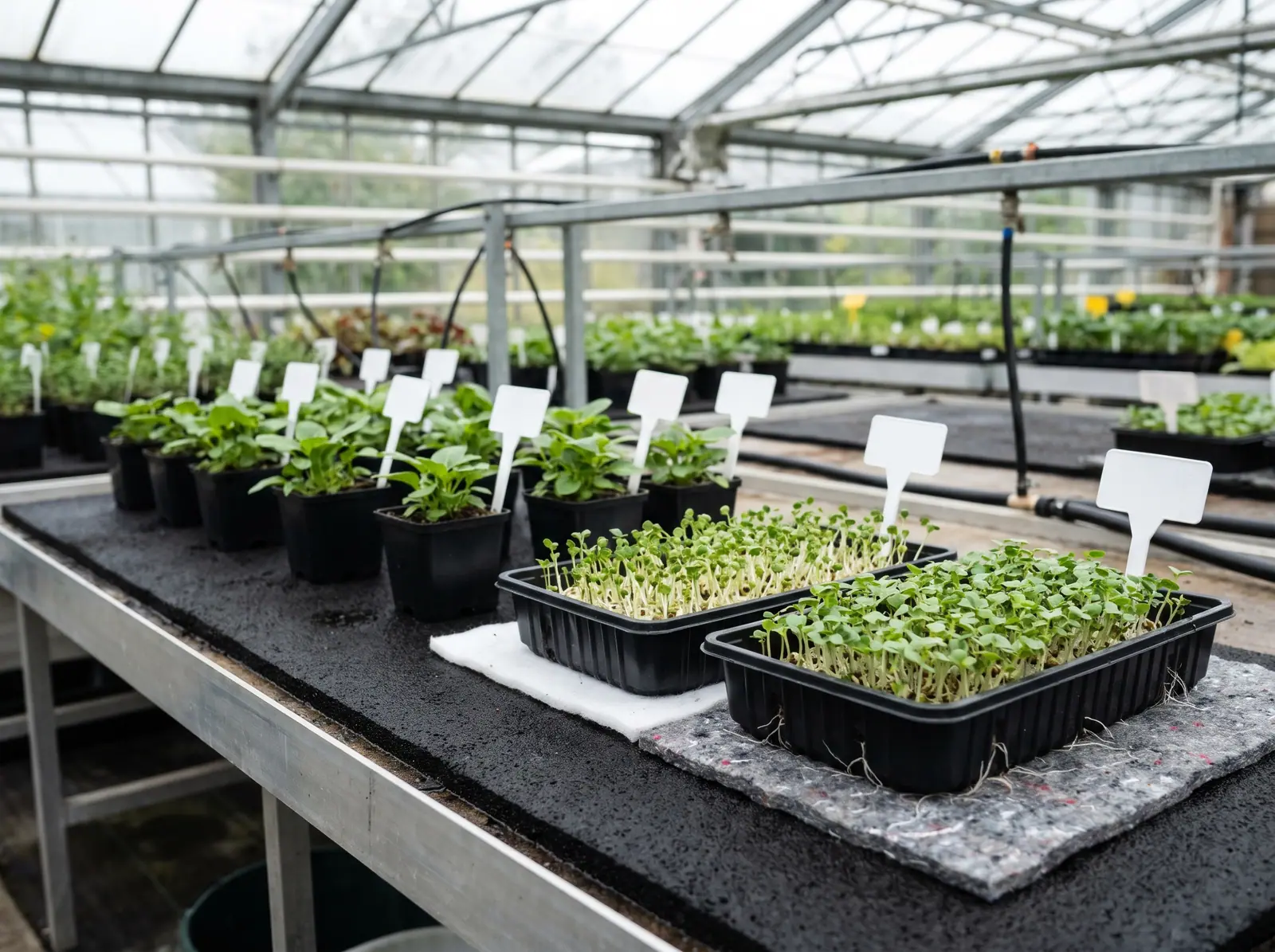
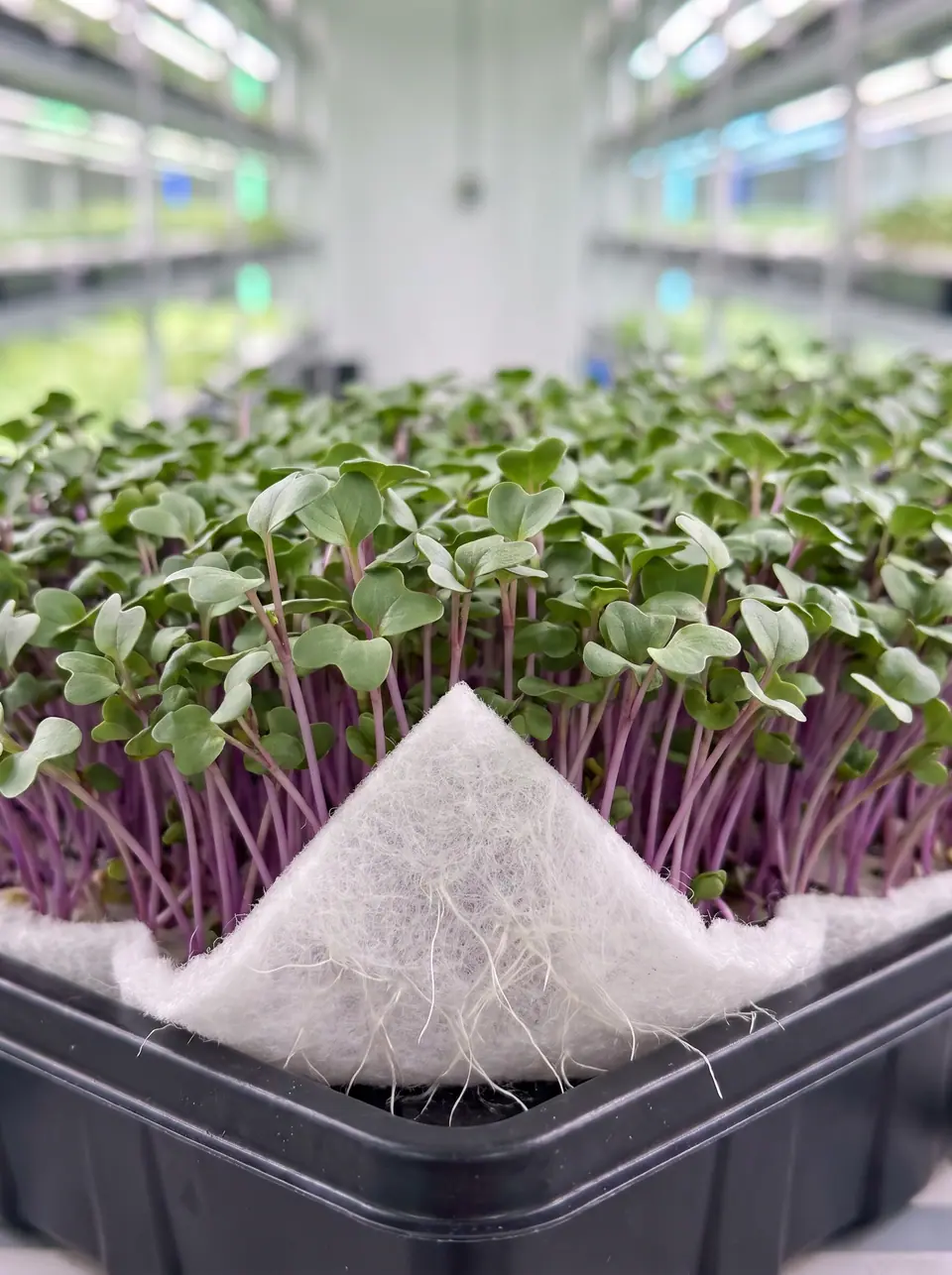
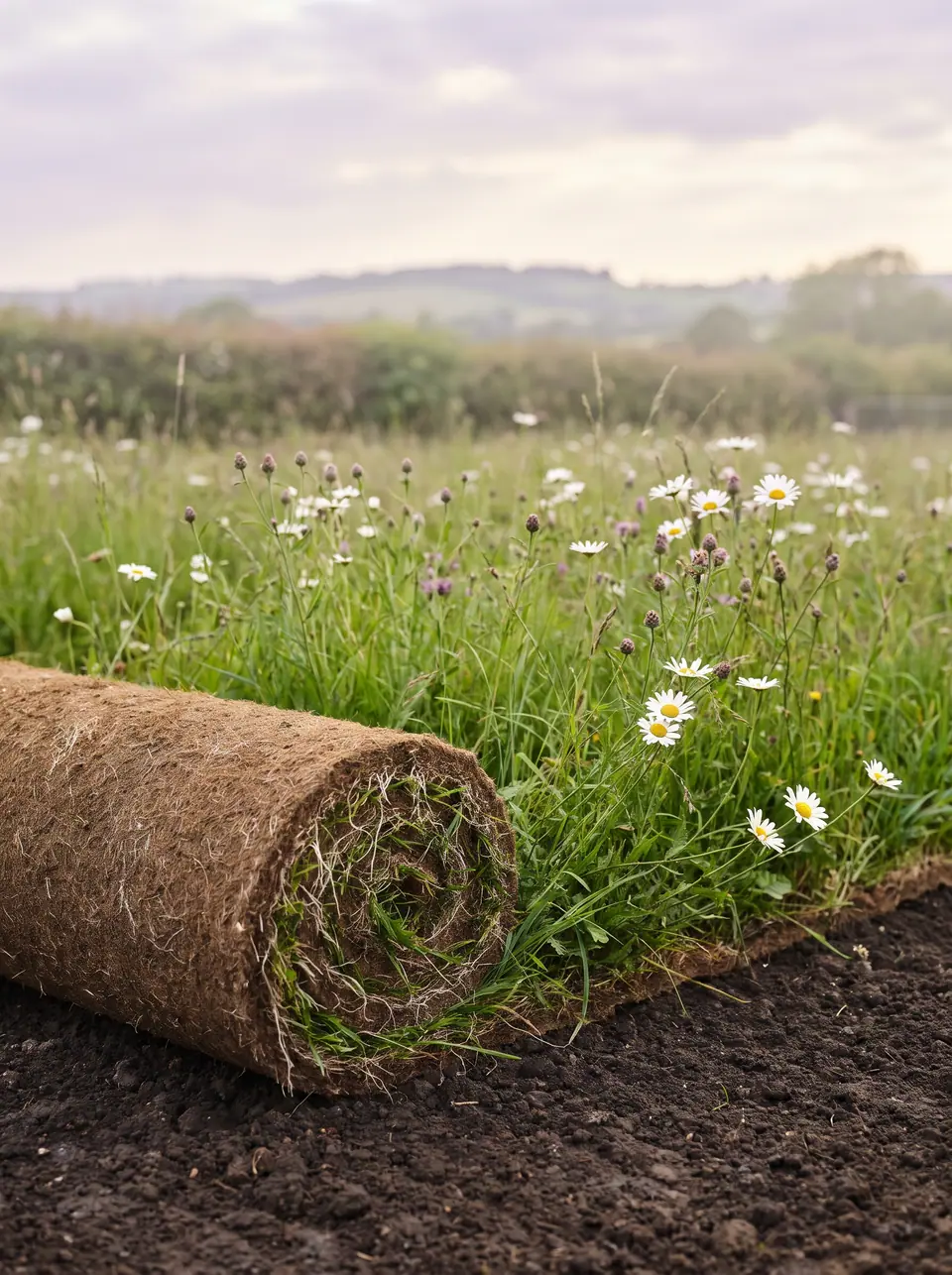
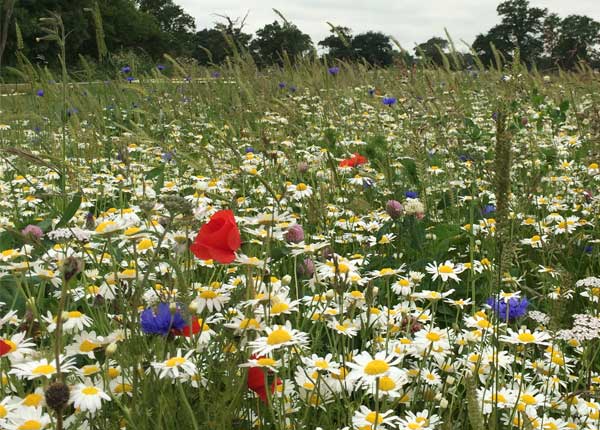
Pre-grown wildflower turf is grown on a carrier layer that holds roots and growing medium together through harvest, transport and laying. Producers use different carriers: moisture-retentive felts made from natural or recycled fibre, plant-based nettings built into the turf, and coir mats under sedum blankets for green roofs. What they share is a layer the roots can knit into, so a cut roll stays in one piece.
A good carrier does three jobs:
- Holds the turf together, so a cut roll can be lifted, rolled and laid without falling apart.
- Holds moisture, while the crop grows and after it is laid.
- Roots through, so the turf knits into the soil below once it is down.
Growfelt supplies the carrier, not the turf. Nurture Mat is sold to growers who sow, grow and harvest their own wildflower and specialist turf.
Which Nurture Mat grade?
| Grade | Fibre | Backing | Weight | Thickness | Width | Roll length |
|---|---|---|---|---|---|---|
| Nurture Mat Bio | Jute and wool (40% jute, 40% fawn wool, 20% other wool) | Oxy-biodegradable grid net | 550 g/m² | 6 mm | 1.2–4 m | 50 or 100 m |
| Nurture Mat Bio Plus | Jute, cotton and wool | Hessian | 550 g/m² | 5 mm | To order, up to 4 m | 50 or 100 m |
| Nurture Mat Wool | Recycled wool and polypropylene | Net | 500 g/m² | 5 mm | To order, up to 4 m | To order |
Bio Plus and Wool are 5 mm thick and Bio is 6 mm (all ±0.5 mm). All three are made to your width, up to 4 m, which suits wide production beds. Matching the mat to your bed and harvester width cuts waste at the edges.
Nurture Mat Bio and Bio Plus are natural-fibre blends that give good water holding. Nurture Mat Wool is the grade designed for higher water holding, for wildflower turf where moisture matters most. We do not yet publish L/m² figures for the range, so sow samples of all three side by side on your own beds.
What breaks down, and what does not
Turf buyers increasingly ask what their turf is grown on, so here is exactly what each mat contains.
| Grade | Fibre layer | Synthetic components |
|---|---|---|
| Nurture Mat Bio | Jute and wool | Grid net, described as oxy-biodegradable |
| Nurture Mat Bio Plus | Jute, cotton and wool on hessian | None in the specification |
| Nurture Mat Wool | Recycled wool and polypropylene | Polypropylene fibre and net backing |
The fibre layer of Bio and Bio Plus is natural fibre. The grid net on Nurture Mat Bio is a degradable plastic rather than a natural fibre. If your customers need a natural-fibre carrier with a natural backing, choose Bio Plus. Nurture Mat Wool contains polypropylene, which does not biodegrade, so it suits turf where water holding comes before breakdown.
The CMA Green Claims Code expects any biodegradable claim to say which parts qualify and under what conditions. That is why we list the backing separately, and it is worth doing the same when you describe your turf.
Wildflower turf and Biodiversity Net Gain
Biodiversity Net Gain (BNG) is the policy many of your turf customers now work within in England. Under the rules on gov.uk:
- Developers must deliver a 10% BNG, and created or enhanced habitats must be maintained for at least 30 years.
- BNG became mandatory for major development on 12 February 2024 and for small sites on 2 April 2024.
- From 6 August 2026, BNG no longer applies to planning applications for developments of 0.2 hectares or below.
- It applies to Nationally Significant Infrastructure Projects from 2 November 2026.
BNG is scored on habitat type, condition and time to reach target condition, not on the label "wildflower". Pre-grown turf does not automatically score higher than seeding. Its advantage is faster cover and less bare ground at establishment, which is where a carrier that holds together and roots through quickly earns its place.