



Buying guide
How to choosecapillary matting
What is capillary matting, and how much water does it save?
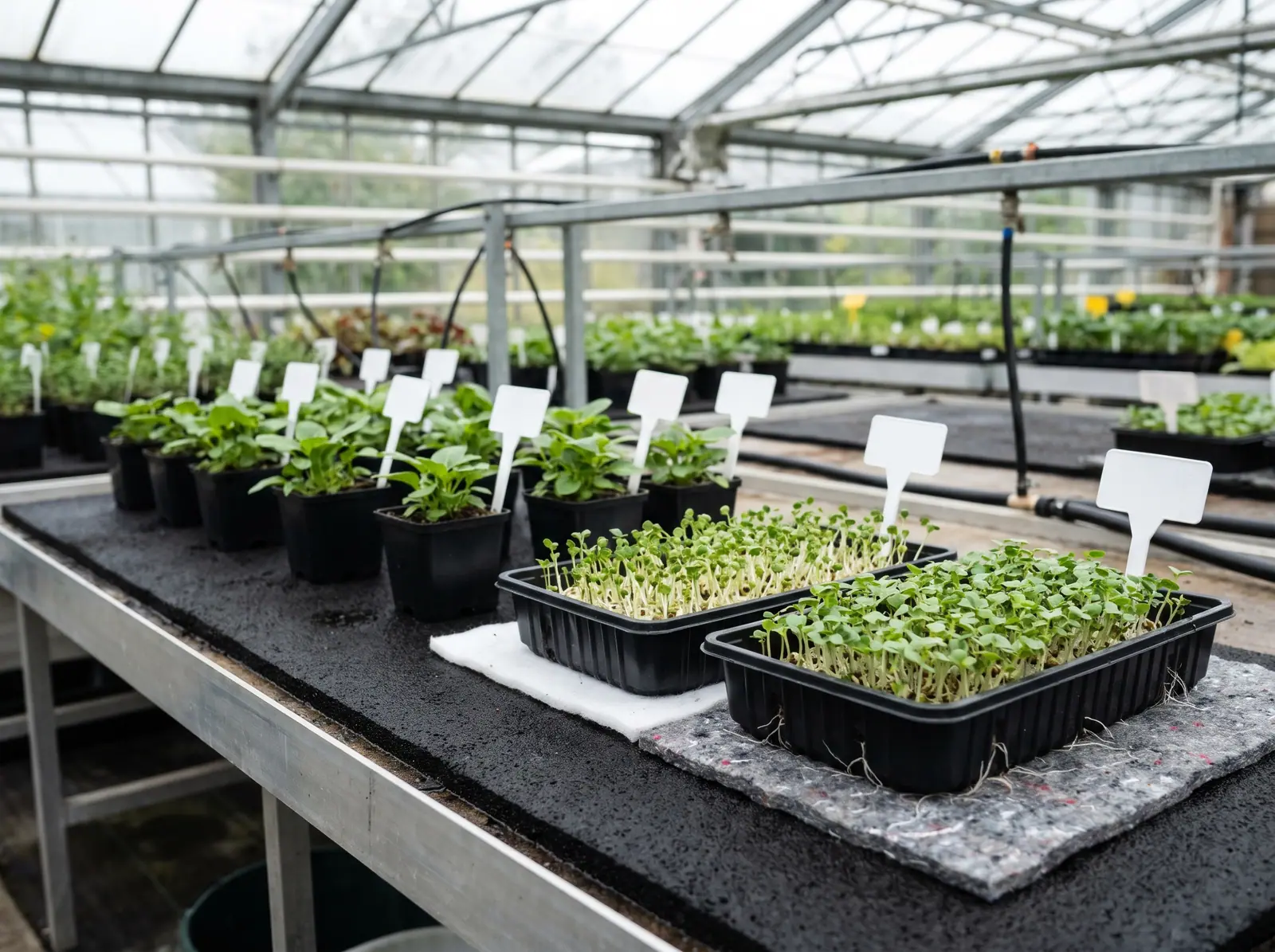
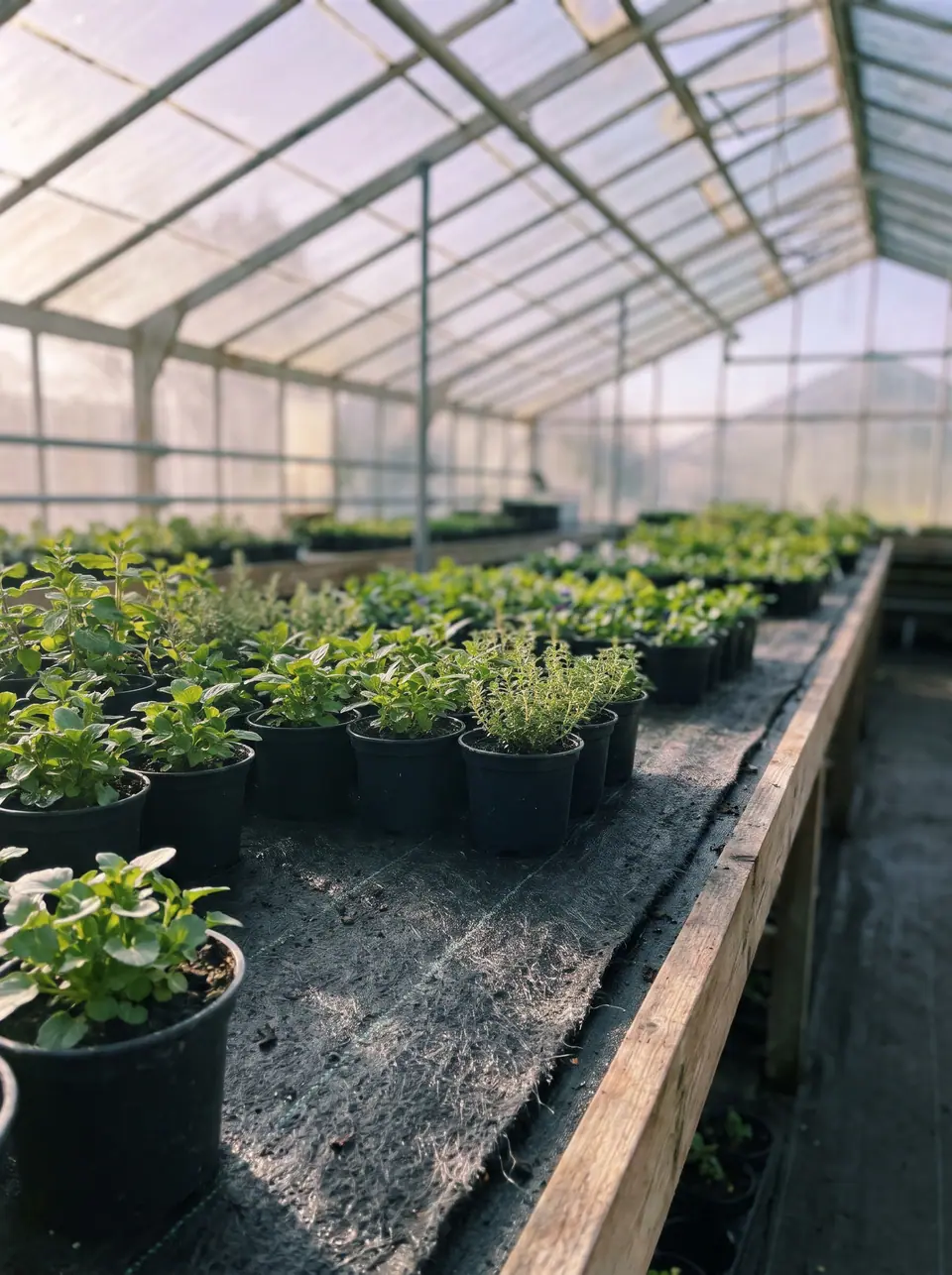
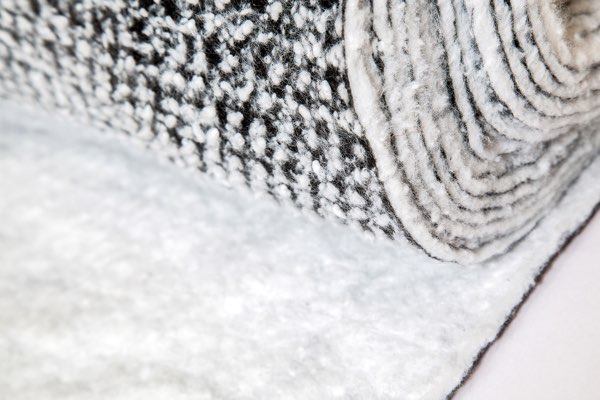
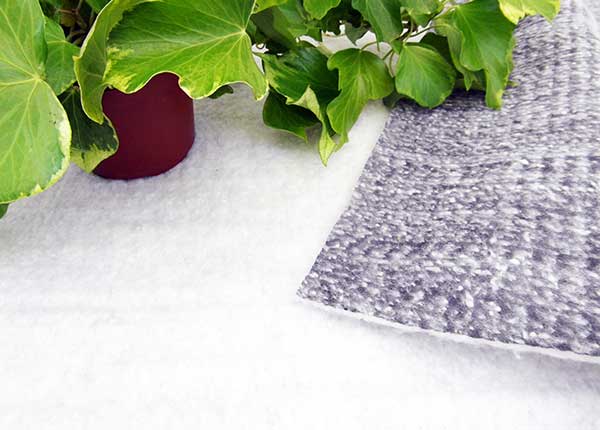
Capillary matting is a felt that soaks up water and holds it against the base of each pot. Compost draws water up through the drainage holes by capillary action, so each plant takes what it needs from below and the leaves stay dry. The mat is kept damp by trickle lines, a header tank or hand watering.
The water saving is real but depends on the set-up. In HDC trial HNS 107 at HRI Efford, capillary matting used roughly a third of the water of overhead irrigation, and good growth was achieved on all three matting types, which included Algon 2H and Algon 4H (Burgess, 2002). The HDC factsheet on capillary irrigation puts low-level systems at about 30% of the water use of some overhead systems.
Treat any single percentage with care. Pot size, spacing, bench slope and how wet the bed is run all change the result. For a step-by-step set-up, read how to use capillary matting.
Which capillary matting grade do I need?
| Grade | Construction | Weight | Water holding | Thickness | Rolls | Use |
|---|---|---|---|---|---|---|
| GroundCloud Purple | Needle-punched recycled acrylic | 275 g/m² | 3.5 L/m² | 4 mm | 1–2.0 m × 50 m (0.5–4.3 m to order) | Entry level, nursery and retail benches |
| GroundCloud Purple 400G | Needle-punched recycled acrylic | 400 g/m² | 4.5 L/m² | 5 mm | 1.23 m × 50 m (other sizes to order) | Heavier GroundCloud grade, more water storage |
| GroundCloud White | Needle-punched viscose blend | 275 g/m² | 2.5 L/m² | 4 mm | 1–1.5 m × 50 m (up to 4.3 m) | Mid range, nursery and retail benches |
| Lantor 1H | Latex-bonded wool felt | 250 g/m² | 2.5–3 L/m² | 3 mm | Up to 1.96 m × 50 m | Light indoor benches |
| Lantor 2H | Latex-bonded recycled wool and textile fibre | 300 g/m² | 4 L/m² | 4 mm | Up to 1.96 m × 50 m | Standard indoor benches |
| Lantor 4H | Latex-bonded wool felt | 550 g/m² | 5 L/m² | 8 mm | Up to 1.96 m × 25 m | Indoor or outdoor, floor-level beds |
| Algon 2H | Lantor 2H with easy-clean polypropylene top | 350 g/m² | About 3 L/m² | 3.5 mm | 1 or 1.42 m × 50 m | Retail display, indoor or outdoor |
| Algon 4H | Lantor 4H with easy-clean polypropylene top | 600 g/m² | 5 L/m² | 8 mm | 1 or 1.22 m × 25 m | Outdoor retail and nursery areas |
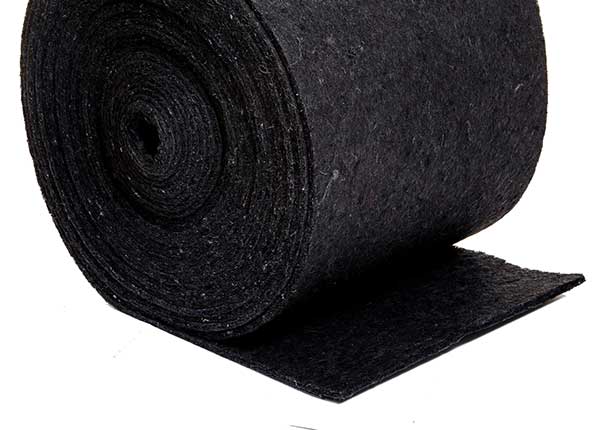
| Lantor AP550 B Black | Needle-punched black polyester, woven scrim in the middle | 550 g/m² | 4.5 L/m² | 5 mm | 1.4 m × 20 m | Indoor or outdoor, where limited capillary movement (typically 5–10 mm rise) is acceptable |
Two rules of thumb. Heavier, thicker mats store more water, so they go longer between irrigations and suit floor-level beds, which the HDC factsheet also recommends. The polypropylene top on Algon is there for appearance and easy cleaning on display benches.
Each grade is compared in more detail, with lifespan and set-up notes, in the capillary matting buyer's guide.
How to set up a capillary bench
Good contact between pot and mat matters more than the grade you choose. The HDC factsheet on capillary irrigation sets out the basics:
- Level the bench. Avoid humps and hollows. A 2% fall (50 mm across a 2.5 m bed) has been shown to suit several types of matting. Split wider beds into sections.
- Lay the mat over a base sheet, on the bench or at floor level.
- Wet the mat up before use. New matting is often water-repellent until it has been thoroughly soaked.
- Feed it evenly. Trickle lines at 0.75–1.2 m spacing usually keep the mat constantly moist.
- Watch the run-off. Significant run-off usually means the bed is being run too wet.
- Think before covering. Permeable covers keep the mat clean, reduce weeds and slow rooting through, but they can weaken capillary contact. Small 9 cm pots were affected more than 3 litre containers.
How long does capillary matting last?
We quote a typical life of 2–3 seasons for the Lantor and Algon grades, and that figure is deliberately site-dependent. The HDC factsheet records matting replaced at around 5-year intervals where matting alone is used and well maintained, so most of the difference comes down to care.
Three things shorten a mat's life:
- Drying out. A mat that dries fully is hard to re-wet. Keep it damp between crops.
- Hard water. High salts and bicarbonate make mats hard and water-repellent. In hard-water areas the factsheet advises acidifying the supply and flushing the mat with plain water from time to time.
- Algae and roots. Light-coloured mats tend to develop algae, and bare mat between widely spaced pots is where algae and fungus gnats start (University of Nebraska Extension). A perforated cover, or black-and-white film laid black side down, keeps light off the mat.
Outdoors, mats can sit too wet in winter, so most capillary matting is used under protection. Lantor 4H and Algon 2H are rated for indoor or outdoor use, and Algon 4H for outdoor use.
Wicking felt for green walls and reservoir systems
The Lantor AP felts do a different job. Instead of storing water under a pot, they draw it upward from a reservoir, for vertical gardens and other reservoir-fed planting. The trade-off is between lift and storage:
| Felt | Weight | Thickness | Water holding | Capillary rise |
|---|---|---|---|---|
| Lantor AP200 Black / AP200 White | 200 g/m² | 1 mm | About 1.2 L/m² | About 100–110 mm after 4 hours |
| Lantor AP250 Black | 250 g/m² | 1.5 mm | About 1.4 L/m² | About 100–110 mm after 4 hours |
| Lantor AP360 White | 360 g/m² | 5 mm | About 3.7–4.0 L/m² | About 45–50 mm |
The thin felts lift water about twice as high. The thicker AP360 stores roughly three times as much water but lifts it about half as far. AP200 and AP250 come on 1.11 m × 50 m rolls, and AP360 on 1.53 m × 50 m. Ask an expert which felt suits your reservoir depth and planted height.